What Motherhood Has Taught Me About Emotions
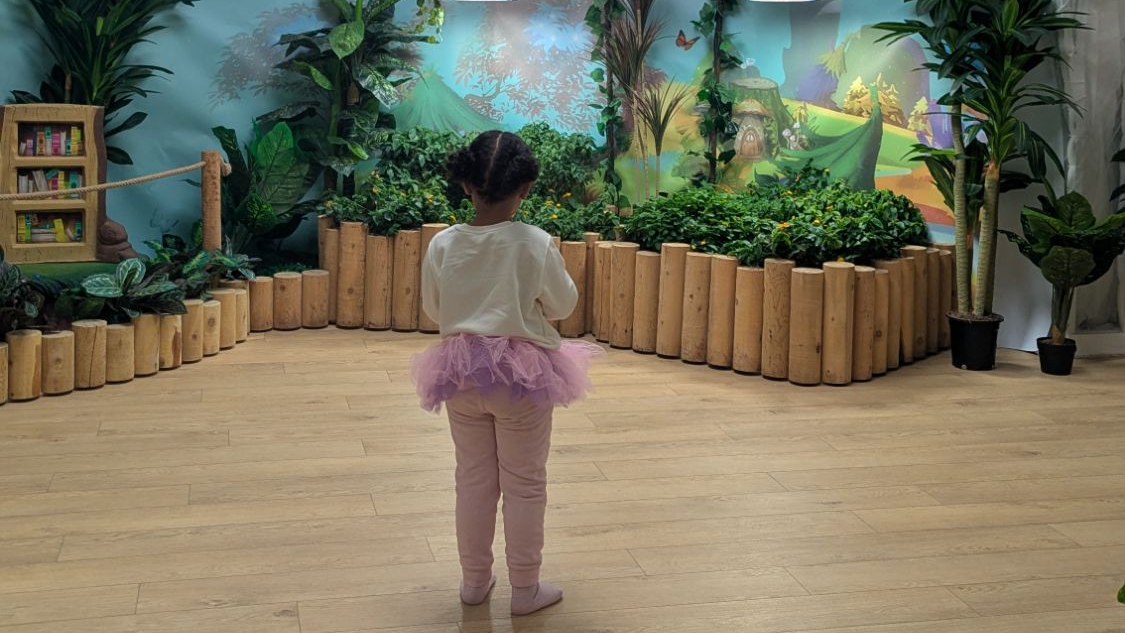
Five years ago, I had my daughter and it fundamentally changed my life and my work around emotions. Watching a human grow will teach you a lot if you a lot about the world and yourself.
Wanting to support my daughter (and now son) in the best way possible, I’ve studied a lot about childhood development over the past five years. Turns out a lot of it already fit with my work with adults on emotion management.
It’s not about being a “child” or being an “adult”. It’s about being a human.
I thought I would share the biggest lessons that I have learned about emotions since navigating motherhood five years in. Motherhood has reinforced a lot of what I already brought to my work, while also showing me the nuance that I previously missed/didn’t understand deeply enough.
We aren’t born knowing what to do with our emotions.
This might seem like an obvious statement but it’s actually a perfect example of “common sense not being so common.” Seeing my daughter have big emotions and needing me and not naturally being equipped to handle them, has been a clear reminder that if we are not born knowing how to respond well to emotional dysregulation. If we did not have teachers in childhood to help us understand and address the feelings we experiences and we did not have practice managing these experiences in the best ways, we will not be good with our emotions as adults. Too often my clients beat themselves up for not innately having these skills or they unfairly expect the people around them to be better than they are capable of being with their own emotions (i.e., family members). While emotions are incredibly natural, working with them doesn’t come naturally and we need to continuously give ourselves and others grace for this.
Managing behavior is not the same as managing emotions.
Often it’s actually suppression and causing stress under the surface (more on that in a section). Of course we have to learn how to behave in a civilized society. Over the years we have had to set many boundaries with my daughter who wanted to hit or bite or hurt herself in some way when dealing with emotional overload. We’ve had to teach her how to navigate playing well with others and not fighting or not responding aggressively to another child’s big emotions. This was important to teach her, but separately we still had to do the work of helping her communicate what she needed and getting her needs met. If we only managed her behavior it would lead her to the place a lot of us end up being in which is knowing how to control ourselves by disconnecting from ourselves. These two lessons are separate and it’s important not to forget to address both our behavior as well as our emotions when we have the space to do so.
Stress is invisible.
Every single living thing experiences [di]stress. Even my 3-month-old gets stressed if he doesn’t get his milk quick enough or get rocked to sleep in time. There have been times when my daughter has had a huge meltdown that has seemingly come out of nowhere. Those moments have prompted me to remember that no one outside of us can see our stress. Our emotions are happening quietly within us. Our needs are going unmet without us even realizing in the moment. It goes back to phrase “Be kind because you never know what someone is going through.” When someone reacts in a way that seems crazy to you, remember that there is always underlying unmet needs and their reaction is more than anything a sign that they need help. (Now you don’t need to be the one to help them, but that’s a subject for another blog post).
You can’t force coregulation.
As an Emotions Coach, I have been there to help my clients regulate when they are having a hard time with the emotions that arise in our sessions. Sometimes this looks like guiding them through their bodies, other times it is validating them, often it is just holding space. When you have a child their is a lot of nuance to holding space and helping them navigate big feelings because your own feelings become triggered. It is not realistic to expect yourself to manage both your dysregulation and your child’s dysregulation perfectly. They might be having a meltdown and don’t want to be soothed – they want to be safe to express what they are feeling. You can’t force your idea of coregulation on to someone else. It’s not really coregulation unless you a) have the capacity to do it which requires a certain level of detachment and b) the other person wants to be soothed. We are not bad people or parents if we need to walk away, take space or set firm boundaries with them so they don’t cause harm to themselves or someone else. Coregulation is not something we can force, and we need to understand the different ways of supporting others and being supported with difficult emotions.
Relationships are harder when you don’t process your own emotions.
The balancing act of needs in relationships (your needs and my needs) means there is always going to be emotional dysregulation to some extent. As you are trying to get needs met so is the other person and as parents we can sacrifice our needs to the point of breakdowns of our own. It’s so important to give ourselves grace for our own responses. If we don’t make space for ourselves and our needs we have less tolerance for the needs/emotions of others in our relationships. We can’t forget that we matter as well as the other person. We can’t pour into our relationships from an empty cup and processing our emotions is how we fill our cup. I’ve learned that I need to do at least one thing for myself each day (even if it means multitasking). My needs don’t cease to matter because my children need me, and this applies in every relationship.
Whether we are parents or not, we need to understand this work because we are humans
We never stop practicing.
This work is so important for us to practice every single day. Every single day gives me opportunities to practice this work. Every single day I am given the choice to notice what I’m feeling, honor it through my body, listen to what is trying to tell me and take some kind of action to address my needs or take care of myself. In all the years that I’ve been doing this work, this has never become more important than since becoming a mother. I noticed the days when I don’t practice this are the harder days. It doesn’t require an elaborate process, but it does mean making space in my day to check in with myself so I can respond more than I react.
And the most important lesson I’ve learned is…
We have to understand and become familiar with our emotions (if we want thriving lives and communities).
The basis of a healthy community is a healthy individual. It is each one of us that makes up our communities. And when we are distressed and dysregulated and don’t understand how to support ourselves, how to support others, how to be supported by others…it leaves our communities fragmented and unable to thrive.
It’s not about all becoming coaches and teaching other people. It’s about normalizing our humanity and the humanity of the people around us. It’s what helps us live better lives.
Having my daughter prompted me to deepen my understanding of emotions and made me realize the importance of all of us having this emotional education. Adults needed to have this basic understanding for the sake of having healthier communities.
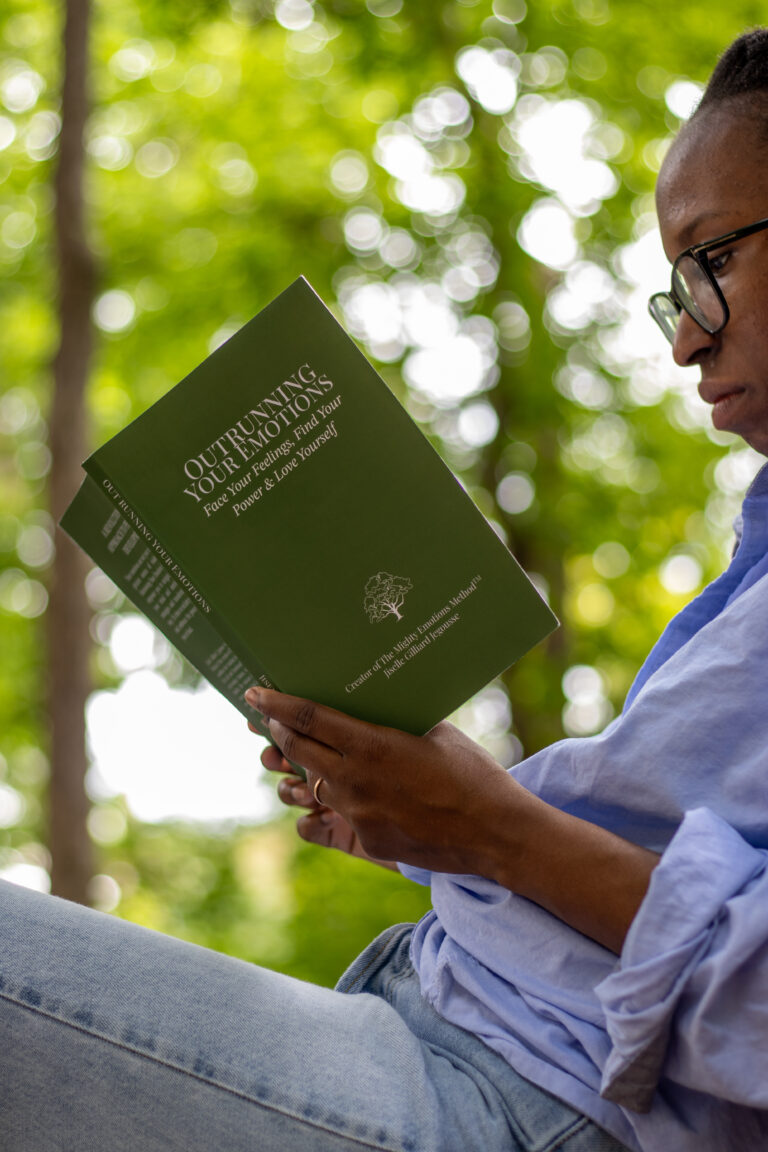
Which is why I wrote my book Outrunning Your Emotions because I wanted this information to be in the hands of as many adults as possible. I have seen the positive it is had not just on readers but on the people closest to them as well through simply observing how they are showing up differently.
Conclusion
Whether you are a parent or not, you are human and everything that I’ve outlined here is applicable to you. It’s so easy to forget these things because of day-to-day experiences in life. I hope that being a part of this community and staying connected to this work helps not just you, but everyone you come into contact with. If all of us do our best to take care of ourselves in this way, it is going to have a ripple effect in our communities and society at large. Knowing that makes it worth it.